

Your New LMS Won’t Save You. Your Learning Strategy Will.

Learning ExperienceYour New LMS Won’t Save You. Your Learning Strategy Will.

Your New LMS Won’t Save You. Your Learning Strategy Will.

The Expensive Habit Nobody Talks About

There is a pattern that repeats itself across sectors and budgets. An organization decides it needs to modernize its training. Someone proposes a new Learning Management System. There are demos, a procurement process, and an announcement. Six months later, the platform is live. A year later, completion rates are low, managers see no difference in performance, and nobody can explain why it isn’t working. 

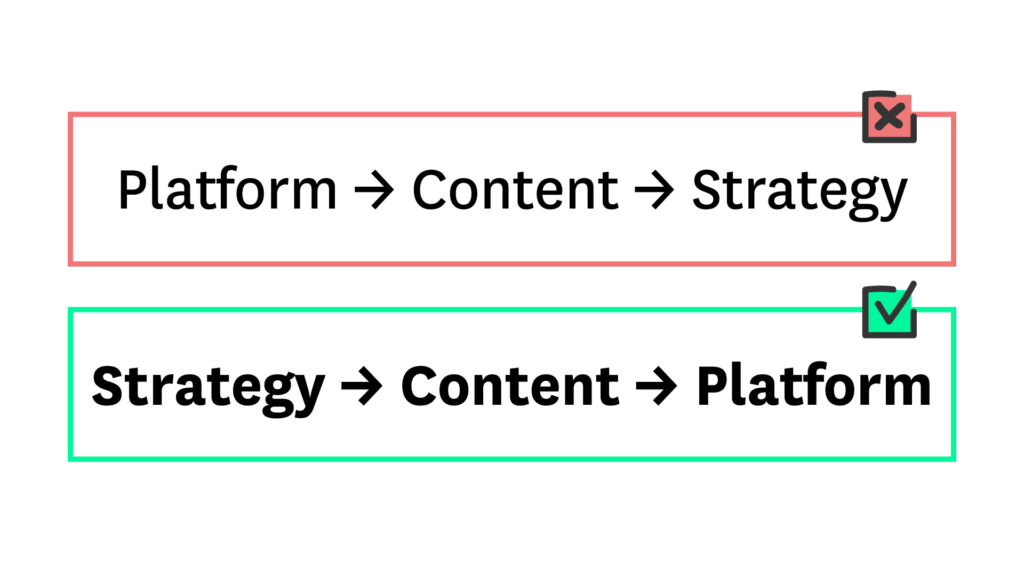
This is not a technology problem. It’s a sequencing problem. The organization bought the solution before it understood the challenge.


The discipline that must come before any of those conversations is learning strategy, not

 “what courses should we build?” but “what performance gap are we closing, and why does it

 exist?” When that question goes unanswered, no platform in the world will fill the gap.

Why Technology-First Decisions Keep Failing

Great platforms can scale learning, personalize experiences, and surface useful data. The problem is never the tool itself.

 It is to buy the tool first. When that happens, the same set of problems follows:

  • Low adoption. Learners don’t log in because the content doesn’t reflect their real working lives. The platform was chosen on behalf of an idea about what learners need, not on actual analysis of what they struggle with.
  • Content without direction. Without a clear strategy, production becomes reactive. Teams upload videos and PDFs because they can, not because those assets sit inside a coherent learner journey.
  • ROI that can’t be proven. If you didn’t define success before you started, you can’t demonstrate it at the end, which is a particularly painful position for NGOs reporting to donors.
  • Misalignment with business goals. Training that isn’t anchored to specific outcomes covers topics and checks boxes but doesn’t move the needle on performance, retention, or mission delivery.
  • Systems that go underused. Research across the corporate training sector shows a significant share of LMS licenses are never fully activated. Organizations pay for features built around a feature list, not a defined set of learning needs.

What Should Come First:

Five Questions Every Organization Needs to Answer

A real learning strategy is not a course catalog or a training calendar. It is a set of deliberate decisions made before a single slide is designed.

 Here are the five questions that need to come first:

01.
What business problems are we solving? Training is not a goal. Reducing errors in financial reporting is a goal. Improving onboarding time is a goal. Start with the real-world outcome and work backward.
02.
What behaviors need to change, and in whom? Capability development is about changing what people do, not just what they know. Identify the specific behaviors causing the gap and the people whose behavior needs to shift.
03.
Who are our learners, really? Not just job titles. What devices do they use? What bandwidth do they have? What languages do they work in? What time constraints do they face? Every design decision follows from this.
04.
What constraints are we operating under? Budget, connectivity, cultural context, device access. Organizations that skip this step build strategies that look great on paper and collapse in the field.
05.
How will we know if it worked? Before designing anything, define what measurable success looks like. Not just completion rates but observable behavior change and organizational outcomes that shift.

Before You Buy: A Quick Checklist for Decision-Makers

If you can’t answer these questions clearly, you are not ready to buy technology yet:

  • Have we completed a learning needs analysis? Do we have evidence of the actual performance gap?
  • Have we identified measurable learning outcomes? Specific, observable changes in behavior, not “staff will understand the policy.”
  • Do we know our learners’ technical environment? Devices, bandwidth, connectivity, mobile vs. desktop.
  • Have we mapped the learner journey? Beyond individual modules, what does the full experience look like?
  • Do we have an evaluation framework? How will we measure behavioral impact, not just completion?
  • Is technology serving the strategy or defining it? If you’re building content to fit a platform, stop and reassess.

What This Looks Like in Practice

We have seen both sides of this pattern. The organizations that started with strategy consistently outperformed those that didn’t, regardless of the platform they eventually used.

NetHope (Leadership Development at Scale)

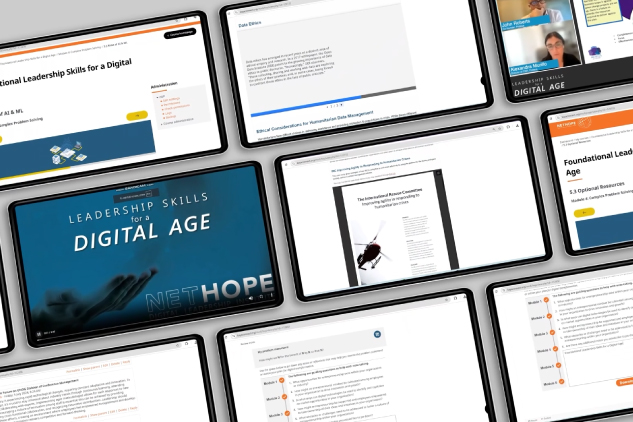
When NetHope commissioned their Leadership Skills Development Academy, the conversation didn’t begin with “what platform should we use?” It began with a harder question, which was “what does digital-age leadership actually look like inside humanitarian organizations, and what capabilities are currently missing?” That needs analysis shaped everything; the learning architecture, modalities, cohort model, and content sequencing. Technology served the strategy, not the other way around. Read the full story in our NetHope LSDA case study.

IFI/UNHCR (Learning in the Most Constrained Environments)

The learners in this program had unpredictable access to technology, time, and stable study conditions. Any team that had started with a platform selection would have quickly discovered it didn’t fit. Kashida began by mapping the learner’s reality first. Format decisions followed. Technology was chosen last. Completion reflected the difference. Full details in our IFI UNHCR case study.

How Kashida Approaches This

We don’t begin by proposing a platform or drafting a course outline. We begin by asking questions that clarify whether training is the right solution and, if so, what kind. In practice, our process follows five steps:

  1. Diagnose the performance gap. We distinguish between knowledge, skill, motivation, and environment problems.
  2. Define measurable outcomes. Before any design work begins, we agree on what success looks like at the behavioral and organizational level.
  3. Build a tailored learning strategy. Modality, sequencing, learner journey architecture, and ongoing support, not just the launch plan.
  4. Design and produce experiences that serve the strategy. Content that is contextually appropriate, engaging, and built to transfer to actual job performance.
  5. Deliver and measure. We help organizations deploy learning at scale and build the evaluation infrastructure that makes it possible to prove impact.

The constraints change depending on whether we are working with a global humanitarian network, a public sector institution, or a regional NGO. The principle does not.

The Takeaway

Technology will keep getting better. Platforms will keep adding features. And organizations will keep investing in them before they’re ready to use them well.
The organizations that get ahead in workforce development are not necessarily the ones with the most sophisticated tools. They are the ones that learned to ask the right questions before opening a purchase order. They defined their learning strategy first and let technology serve it.
If your organization is planning a learning initiative in 2026 or trying to understand why the last one underdelivered, the answer almost certainly starts with strategy, not software.
 
kashida logo white
Our passion is your success. We’re here to help you realise your learning goals and get the results you need to succeed. Why not get in touch today?